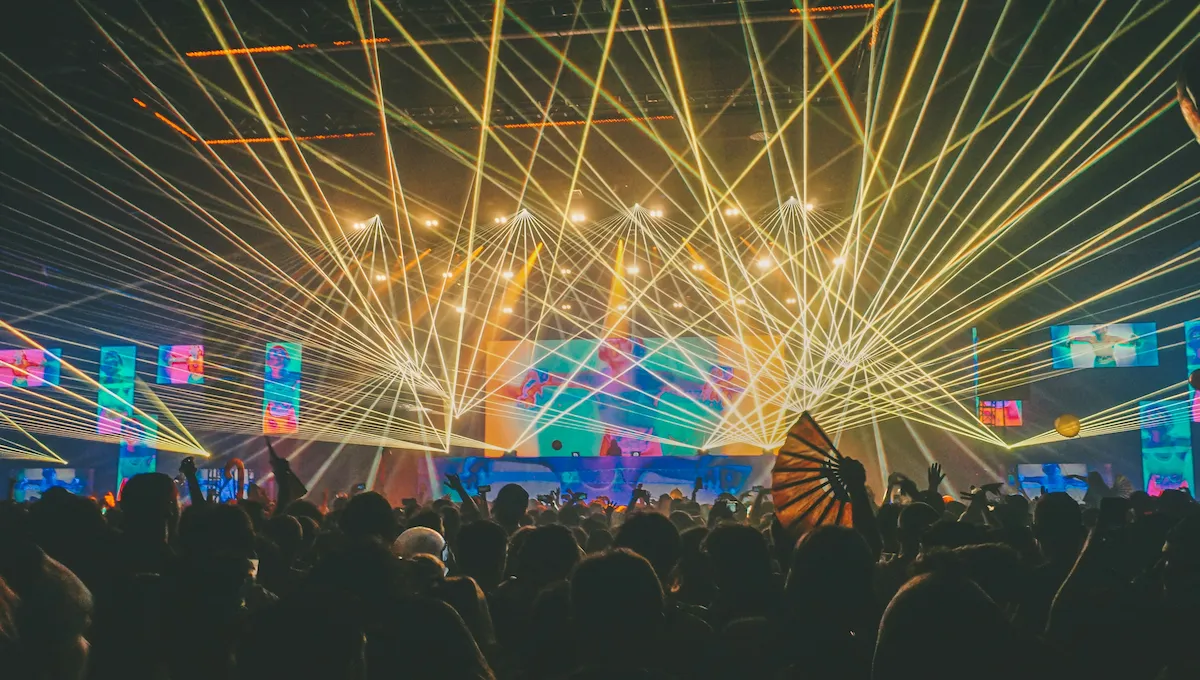
Classical music and electronic dance music seem like opposites: one is played by orchestras in concert halls, the other by DJs in clubs. But they have more in common than you’d think. Both are built on repetition, long builds and huge emotional peaks, and both are often instrumental. So it’s no surprise that producers keep returning to the classics for melodies.
This list brings together the most famous EDM tracks built on classical music, in chronological order. For each, we look at the original piece, how the producer transformed it and why the combination works.
1. Cygnus X – “The Orange Theme” (1994)
Classical source: Henry Purcell, Music for the Funeral of Queen Mary (1695), via Wendy Carlos’s synthesizer version for Stanley Kubrick’s film A Clockwork Orange (1971)
The sound: “The Orange Theme” is early ’90s German trance, running at around 135–140 BPM. A rolling, sequenced bassline drives the track, while analog-style synths and long filter sweeps slowly open the sound, following the classic trance arrangement of long builds and breakdowns. Listen for how Purcell’s slow, solemn melody stays almost unchanged while the driving beat underneath transforms its mood from mournful to euphoric.
Why it works: Purcell wrote his march to be slow and ceremonial, played by trumpets and drums at a royal funeral, so its melody moves in long, stately notes. Cygnus X kept those notes but placed them over a trance beat running far faster than the original, so the melody seems to float above the rhythm instead of marching with it. That’s a classic trick for adapting slow classical themes to dance music: the beat and bassline carry the energy, while the melody keeps its original, unhurried shape. Wendy Carlos had already done half the work in 1971 by moving the piece from brass to synthesizers, giving it the cold, electronic tone that made it feel at home in a trance track. The result keeps the grandeur of a 17th-century royal ceremony but turns its grief into euphoria.
Its legacy: the track has been remixed many times since, and it became a trance classic.
2. Rob Dougan – “Clubbed to Death” (1995)
Classical source: Edward Elgar, Enigma Variations (1899)
The sound: “Clubbed to Death” is trip-hop with neo-classical elements, built on a slow, laid-back breakbeat rather than a club tempo. A sampled string section, a heavy, dusty breakbeat and deep bass sit under a live, improvised piano, and the strings are mixed big and cinematic, like a film score. Trip-hop is all about atmosphere rather than energy, and the track’s power comes from the contrast between Elgar’s elegant strings and the gritty drums.
Why it works: Elgar’s Enigma theme is stately and melancholic, written in a minor key with a slightly hesitant, broken-up phrasing. Rather than speeding it up, Dougan kept the classical mood intact, using the Victorian-era strings almost untouched as an introduction, then letting a slow, heavy breakbeat lock into the theme’s natural pace. Instead of chopping Elgar into a dance loop, he used the piano to improvise around the theme, the way a jazz musician might play over a standard. That approach respects the original while giving it a modern, cinematic edge, which is exactly why it worked so well in The Matrix: it sounds both timeless and futuristic.
Its legacy: it’s more trip-hop than club music, but it became one of the most recognizable electronic tracks of the late ’90s after appearing in The Matrix (1999), in the famous “woman in the red dress” scene.
3. William Orbit – “Barber’s Adagio for Strings” (1999)
Classical source: Samuel Barber, Adagio for Strings (1936)
The sound: Orbit’s original is ambient electronic music, replacing Barber’s orchestra with soft synth pads that swell slowly, while Ferry Corsten’s remix turns it into uplifting trance at around 135–140 BPM. Corsten added a four-on-the-floor kick, a rolling bassline and trance’s breakdown structure, so the melody returns at full power after each build. Barber’s long, rising melody works almost exactly like a trance breakdown, reaching its emotional peak just as the beat kicks back in.
Why it works: Barber’s Adagio is built on one long melody that climbs slowly, step by step, toward a huge emotional climax, then suddenly breaks off into silence before a quiet ending. That shape is almost identical to a trance breakdown: tension building over a long stretch, a peak and a moment of release. William Orbit first translated the string orchestra into soft, swelling synth pads, preserving the slow, sustained feel of the original. Ferry Corsten’s remix then placed that melody over a driving trance beat, letting the slow strings unfold over a fast rhythm, and timed the climax to land where the beat returns. The piece barely needed changing: Barber had written a perfect trance breakdown more than 60 years earlier.
Its success: the single reached No. 4 in the UK in December 1999.
4. Captain Jack – “Dream a Dream” (1999)
Classical source: Edvard Grieg, In the Hall of the Mountain King (1875)
The sound: “Dream a Dream” is classic Eurodance, typically around 130–140 BPM, combining a pumping four-on-the-floor beat with rap verses and a sung chorus. Bright synth riffs carry the Grieg melody, mixing club production with pop songwriting in true Eurodance style. Grieg’s playful, creeping theme becomes a catchy synth hook that repeats throughout the track.
Why it works: Grieg’s “In the Hall of the Mountain King” is built on a single short, bouncing phrase that repeats over and over, which makes it ideal material for a dance riff. In the original, the music is played by the orchestra with a mischievous, tiptoeing character. Captain Jack turned that phrase into a bright synth hook and locked it to a steady Eurodance beat, removing Grieg’s gradual speed-up so the riff could repeat at a constant dance tempo. The melody’s playful, slightly sinister feel suits Eurodance’s mix of energy and humor, and because almost everyone knows the tune, it gives the track an instant hook.
Why it’s here: it shows how ’90s Eurodance raided classical music for instantly recognizable hooks. Paired with Zedd’s “Dovregubben” later on the list, it also shows the same 19th-century melody turning up in two very different eras of dance music.
5. Rollerball (Above & Beyond) – “Albinoni” (2003)
Classical source: the Adagio in G Minor, usually credited to Tomaso Albinoni but actually composed by Italian musicologist Remo Giazotto and published in 1958
The sound: “Albinoni” is progressive trance, at around 130–135 BPM, built from slowly evolving layers and warm pads. Instead of sudden drops, the track builds gradually, introducing the Adagio’s melody gently and developing it over time. Progressive trance is all about patience, letting the emotion of the melody grow slowly rather than hitting you with it all at once.
Why it works: the Adagio in G Minor combines a slow, aching string melody with a steady bass line originally played on the organ, a structure that already resembles electronic music: a repeating foundation with an emotional melody on top. In progressive trance, that organ-style bass translates naturally into a rolling synth bassline, while the strings become warm pads and leads. Because progressive trance favors gradual development over sudden drops, the piece’s slow, sorrowful build fits perfectly, allowing the melody to emerge layer by layer. Its minor key also matches trance’s love of bittersweet, melancholic emotion.
A fun fact for readers: the piece is one of classical music’s most famous misattributions. The “Albinoni” title repeats the myth, but Giazotto wrote most or all of it himself.
6. Tiësto – “Adagio for Strings” (2005)
Classical source: Samuel Barber, Adagio for Strings (1936)
The sound: Tiësto’s version is hard-edged trance at around 138–140 BPM, with a punchy, driving kick and a rolling bassline. Big, layered supersaw-style synth leads carry Barber’s melody, and a dramatic breakdown leads into snare rolls that build to an explosive return. Compared with William Orbit’s reflective version, the melody is the same, but Tiësto turns it into a stadium anthem.
Why it works: Tiësto took the same Barber melody as William Orbit but adapted it in a completely different way. Instead of soft pads, he carried the melody with big, layered supersaw synths, much brighter and more aggressive than strings. He also made the rhythm harder, with a punchier kick and a faster, more driving feel, turning a mournful piece into a festival anthem. The key adaptation is in the arrangement: Tiësto uses the melody’s long climb as the build-up and saves its most famous high notes for the moment the full track returns, so the emotional peak of Barber’s music becomes the peak of the dance floor.
Its legacy: it became one of Tiësto’s signature tracks and one of the best-known trance anthems of the 2000s. Two hit trance versions of the same piece in six years shows how perfectly Barber’s music fits the genre.
7. Wolfgang Gartner – “Wolfgang’s 5th Symphony” (2009)
Classical source: Ludwig van Beethoven, Symphony No. 5 (1808)
The sound: “Wolfgang’s 5th Symphony” is electro house at around 126–128 BPM, built on gritty, distorted synth stabs and punchy drums. Heavy sidechain compression gives the track a pumping groove, and its sharp, staccato riffs match the stabbing rhythm of Beethoven’s motif. The moment the famous four-note opening appears as a bridge works almost like a drop, instantly recognizable and dramatic.
Why it works: Beethoven’s Fifth opens with one of the most famous rhythms in music: three short notes and a long one (“da-da-da-DUM”). That rhythm is already percussive and aggressive, which is exactly what electro house needs. Gartner didn’t simply copy the symphony over a beat; he reworked its melody into short, staccato synth stabs that hit in time with the groove, and used heavy sidechain so the riffs pump with the kick. He then saved the famous four-note opening for the bridge, where it hits like a dramatic reveal. Balancing a clear reference with a complete reinvention means listeners recognize Beethoven while still hearing something new.
Its legacy: the track grew out of a rework Gartner had made at age 14 and rediscovered years later. It became the best-selling track on Beatport at the end of 2009, inspired many imitators and launched Gartner into the EDM big leagues.
8. Clean Bandit – “Mozart’s House” (2010)
Classical source: Wolfgang Amadeus Mozart, String Quartet No. 21 (1789)
The sound: “Mozart’s House” is a classical-electronic crossover built on a house beat at around 120–125 BPM. Instead of using samples, Clean Bandit recorded live, classically played strings and combined them with a four-on-the-floor groove and spoken vocals. Because the group’s members are classically trained, the Mozart passages feel performed rather than pasted in, and the strings sit naturally inside the club beat.
Why it works: Mozart’s String Quartet No. 21 is light, graceful and rhythmically precise, with clear, flowing phrases that sit comfortably on a steady pulse. That precision makes it easy to place over a house beat without fighting the rhythm. Instead of sampling a classical recording, Clean Bandit performed the strings themselves, so they could play the parts tightly in time with the groove. The light, elegant mood of the quartet also contrasts nicely with the club beat and spoken vocals, creating a playful, witty clash between the concert hall and the dance floor rather than a dramatic one.
Its success: first shared on YouTube in 2010 and later released as a single, it reached No. 17 in the UK and No. 5 on the UK Dance Chart.
9. Zedd – “Dovregubben” (2011)
Classical source: Edvard Grieg, In the Hall of the Mountain King (1875)
The sound: “Dovregubben” (which means “the Mountain King” in Norwegian) is electro house with complextro influences, at around 128 BPM, full of glitchy edits, buzzing, distorted synths and fast changes between sounds. Its big build-up mirrors the structure of Grieg’s original, which repeats one melody faster and louder until it explodes. In other words, Grieg wrote an EDM build-up more than a century before EDM existed, and Zedd simply plugged it into a club track.
Why it works: Grieg’s piece starts quietly and slowly, then repeats its melody faster and louder until it explodes into chaos, a natural crescendo that works like an EDM build-up. Zedd kept that idea of growing intensity but expressed it through modern production: instead of an orchestra speeding up, he used rising energy, stacked synths and tighter rhythms leading into an electro drop. He also translated the orchestral melody into buzzing, distorted synths and glitchy edits, giving the 19th-century tune a sharp, modern edge. It shows how a classical crescendo can be translated directly into the build-and-drop structure of electro house.
Why it’s here: it’s a great example of the early-2010s electro house sound meeting a classical melody almost everyone recognizes.
10. Overwerk – “Toccata” (2015)
Classical source: Johann Sebastian Bach, Toccata and Fugue in D minor (early 18th century)
The sound: “Toccata” is electro with glitch and complextro elements, at around 128 BPM, alternating sampled organ phrases from Bach with heavy, distorted synths and chopped edits. The track plays like a call and response: Bach’s organ builds the tension, and Overwerk’s hard-hitting electro sections release it like a drop.
Why it works: Bach’s Toccata is full of dramatic contrasts: fast, cascading runs, sudden pauses and massive organ chords. Overwerk uses those contrasts as structure, letting the organ phrases set up tension and answering them with heavy, distorted electro sections that hit like drops. Because the Toccata’s rhythm is free and improvisational in its original form, he had to tighten it into a steady tempo, chopping and arranging the phrases so they fit a dance groove. The result keeps Bach’s thunderous drama but turns it into a call and response between the 18th-century organ and modern synths.
Why it’s here: it’s the best EDM answer to the question “what would Bach sound like in a club?” It also shows that by the 2010s, producers weren’t just sampling one classical melody; some were building entire releases around the classics.
Honorable mention
Walter Murphy & the Big Apple Band – “A Fifth of Beethoven” (1976): Beethoven’s famous four-note opening from his Fifth Symphony (“da-da-da-DUM”), played over a disco beat with funky bass, strings and horns. It’s disco rather than EDM, but it went to No. 1 in the US, appeared on the Saturday Night Fever soundtrack and proved that classical melodies could fill a dance floor a decade before house and techno were born.
Vanessa-Mae – “Toccata and Fugue in D Minor” (1995): Bach’s dramatic organ piece played on electric violin, with synthesizers and the Royal Philharmonic Orchestra. More classical crossover than dance music, but it reached No. 16 in the UK and introduced many young listeners to classical music with a modern edge.
Sweetbox – “Everything’s Gonna Be Alright” (1997): Bach’s calm, flowing “Air” from Orchestral Suite No. 3 (often called “Air on the G String”), performed by the German Symphony Orchestra and looped under a hip-hop and R&B beat with sung and rapped vocals. It’s closer to dance-pop than EDM, but it was a big European hit, reaching No. 5 in the UK.
Deadmau5 – “Clockwork” (2008): a progressive house rework of Cygnus X’s “The Orange Theme,” which takes Purcell’s funeral march from Wendy Carlos’s synthesizers (1971) to trance (1994) to Deadmau5’s polished sound.
Armin van Buuren & BLR – “Bach to the Future” (2025): Armin van Buuren and Léon Bolier rework Bach’s Toccata into driving techno, pairing baroque drama with modern kicks and dark synths. Armin made it as a tribute to his father, who filled their family home with classical music. It’s too new to call a classic, but it shows that the masters still inspire electronic music’s biggest names today.
Why classical and electronic music fit so well
Look at these tracks together, and the connection is clear: many classical masterpieces were already built like dance music. Barber’s Adagio climbs slowly toward an emotional peak, just like a trance breakdown. Grieg’s “Mountain King” repeats one short idea faster and louder until it explodes, the same way an EDM build-up works. Beethoven’s “da-da-da-DUM” is so rhythmic it hits like a synth stab, and Bach’s Toccata alternates tension and release like a drop. Even Purcell’s 300-year-old funeral march sounds as futuristic on synthesizers today as it did in A Clockwork Orange in 1971.
Producers didn’t have to force these pieces onto the dance floor. They kept the melodies and changed the setting: strings became synth pads, organs became leads, and slow ceremonial rhythms were placed over driving beats. That’s why classical music in EDM never feels like a gimmick. Great melodies don’t go out of date; they just find new dance floors.
Which classical piece would you love to hear as an EDM track? Tell us in the comments.